
Healthcare — Training
Training for the First Breath
Portable neonatal simulation that fits in a backpack
Client: MaineHealth
Challenge
Babies born in distress at rural hospitals face 6x higher risk of complications compared to urban centers. Traditional neonatal simulation labs cost upwards of $1 million, putting them far out of reach for the small, rural hospitals that need them most.
Solution
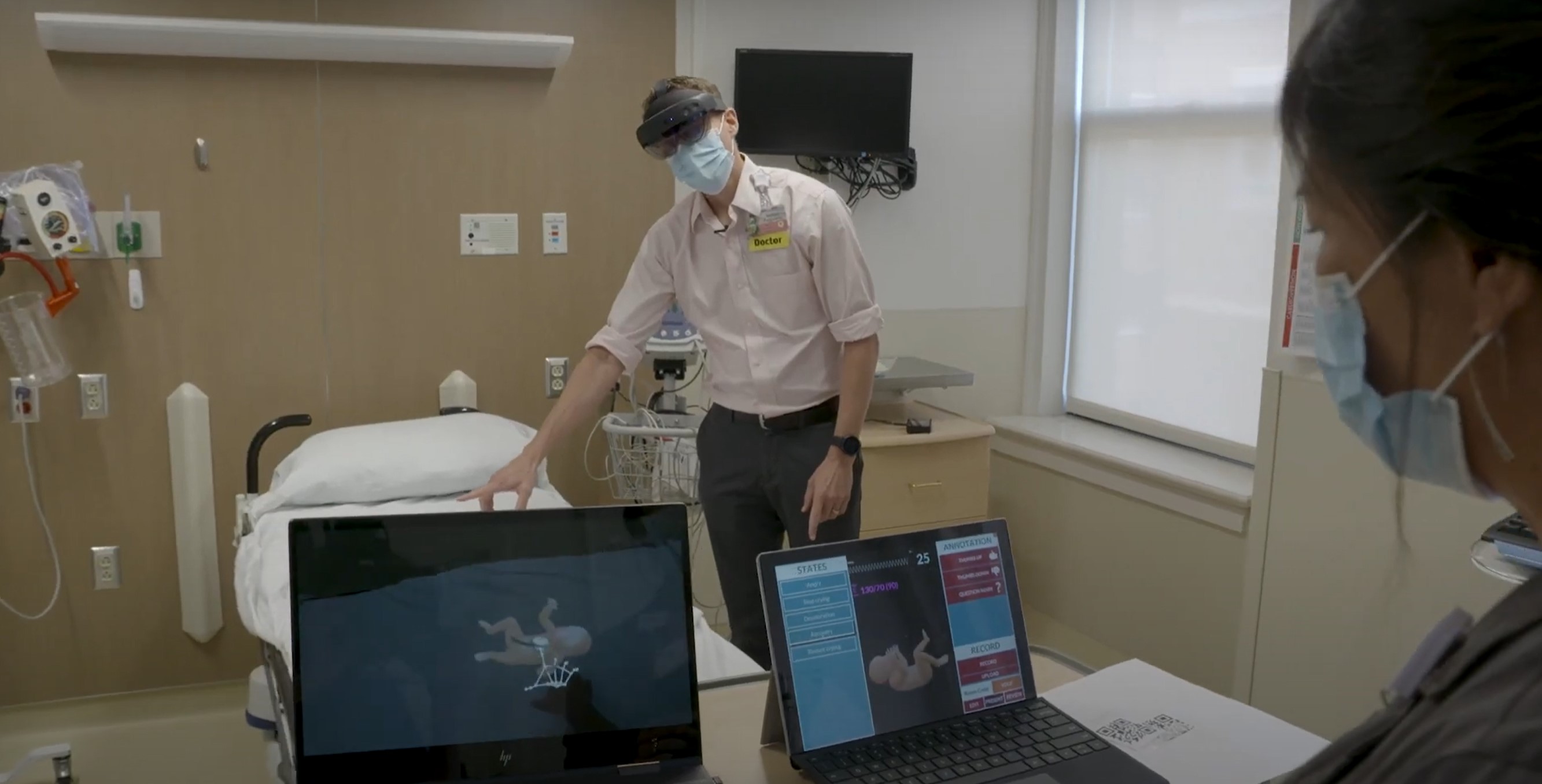
CrewXR-powered HoloBaby simulation kits cost under $20,000 and fit in a backpack. The system combines physical mannequins with holographic overlays that create realistic neonatal emergency scenarios — synchronized across every team member's headset so the entire clinical team practices together, just like they would in a real resuscitation.
Results
- •Simulation kit cost reduced from $1M+ to under $20K
- •Portable system fits in a backpack
- •Deployed across rural Maine hospitals
- •Expanding to international training programs
- •Clinicians instinctively reach for the prototype baby — the realism changes behavior
The Challenge: A Rural Hospital Crisis
When a baby is born in distress, the first minutes are critical. Clinical teams need to perform precise interventions — clearing airways, managing ventilation, administering medications — with speed and coordination that only comes from practice.
But practice requires simulation, and traditional neonatal simulation labs cost over $1 million. They require dedicated rooms, expensive mannequins, and technical staff to operate. For the large urban teaching hospitals, this investment is routine. For a 25-bed rural hospital in northern Maine, it's impossible. The result: a 6x higher complication rate for newborns in distress at rural facilities.
The Solution: A Simulation Lab in a Backpack
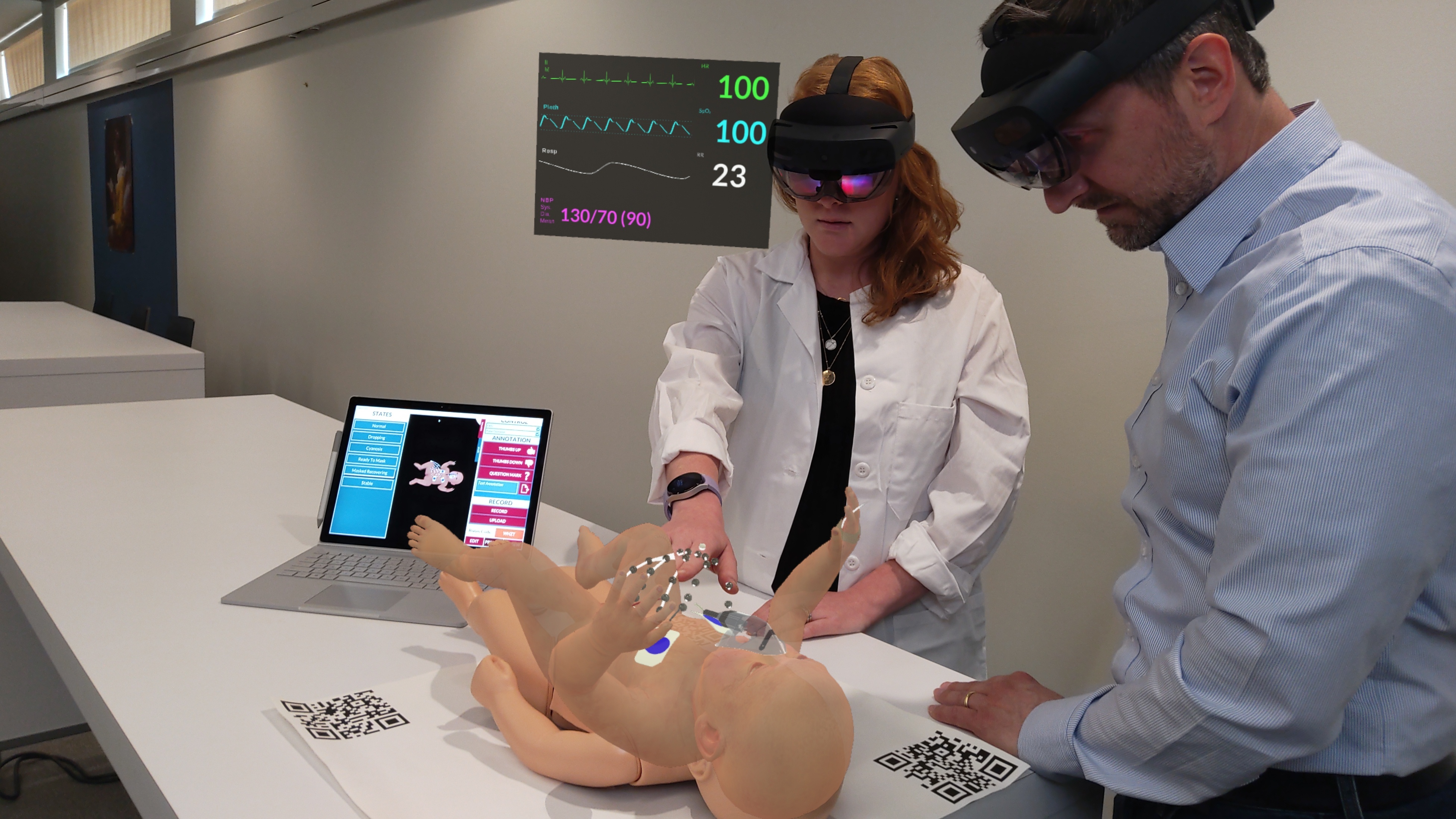
The HoloBaby system, powered by CrewXR, reimagines neonatal simulation from the ground up. Instead of a million-dollar lab, the entire system fits in a backpack and costs under $20,000.
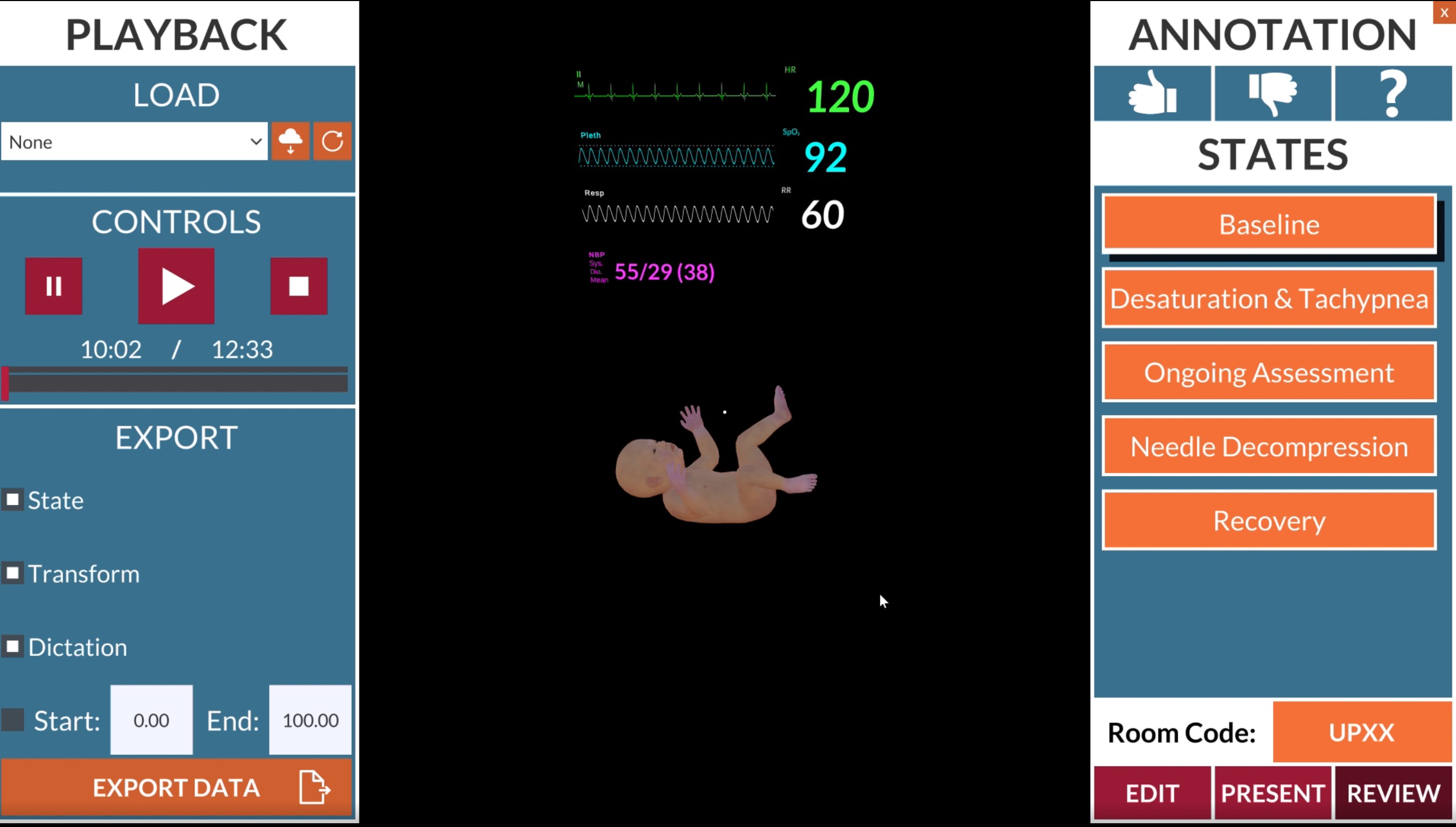
The kit combines a physical mannequin with holographic overlays delivered through mixed reality headsets. When a scenario begins, the baby's condition is projected holographically — skin color changes, chest movements, vital sign displays — all synchronized in real-time for every participant in the room. Clinical teams practice the same critical interventions they would in a full simulation lab, but they can do it in any room of any hospital.
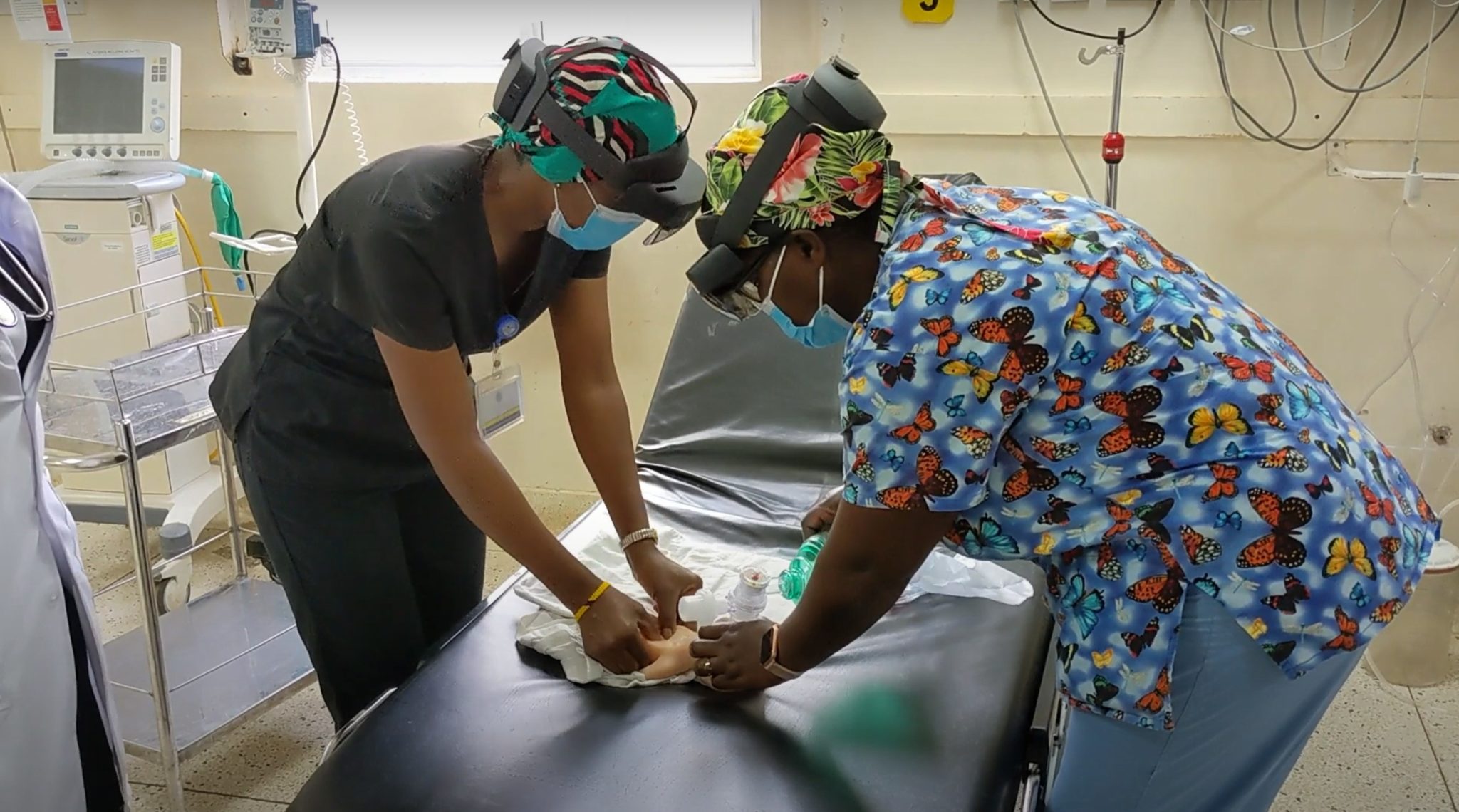
The realism is striking. "When that prototype baby cries, people reach for it," says Dr. Michael Ferguson of MaineHealth. "There is a realism aspect to this not found anywhere else."
The Impact: From Maine to the World
HoloBaby kits have been deployed across rural hospitals in Maine, bringing simulation training to clinical teams that previously had no access. The system is designed for non-technical users — a nurse educator can set up and run scenarios without engineering support.
The program is now expanding beyond Maine, with plans for international deployment to bring neonatal simulation training to resource-limited settings worldwide. The core insight is powerful: the best simulation technology isn't the most expensive — it's the one that actually reaches the people who need it.
“When that prototype baby cries, people reach for it. There is a realism aspect to this not found anywhere else.”