
Industrial
Inspecting Infrastructure from Anywhere
Safer, smarter infrastructure diagnostics with holographic annotation
Client: Case School of Engineering
Challenge
Bridge and infrastructure inspection is tedious, dangerous, and subjective. Inspectors must physically climb structures, often in hazardous conditions, and their assessments depend heavily on individual experience and judgment — leading to inconsistent reporting and missed defects.
Solution
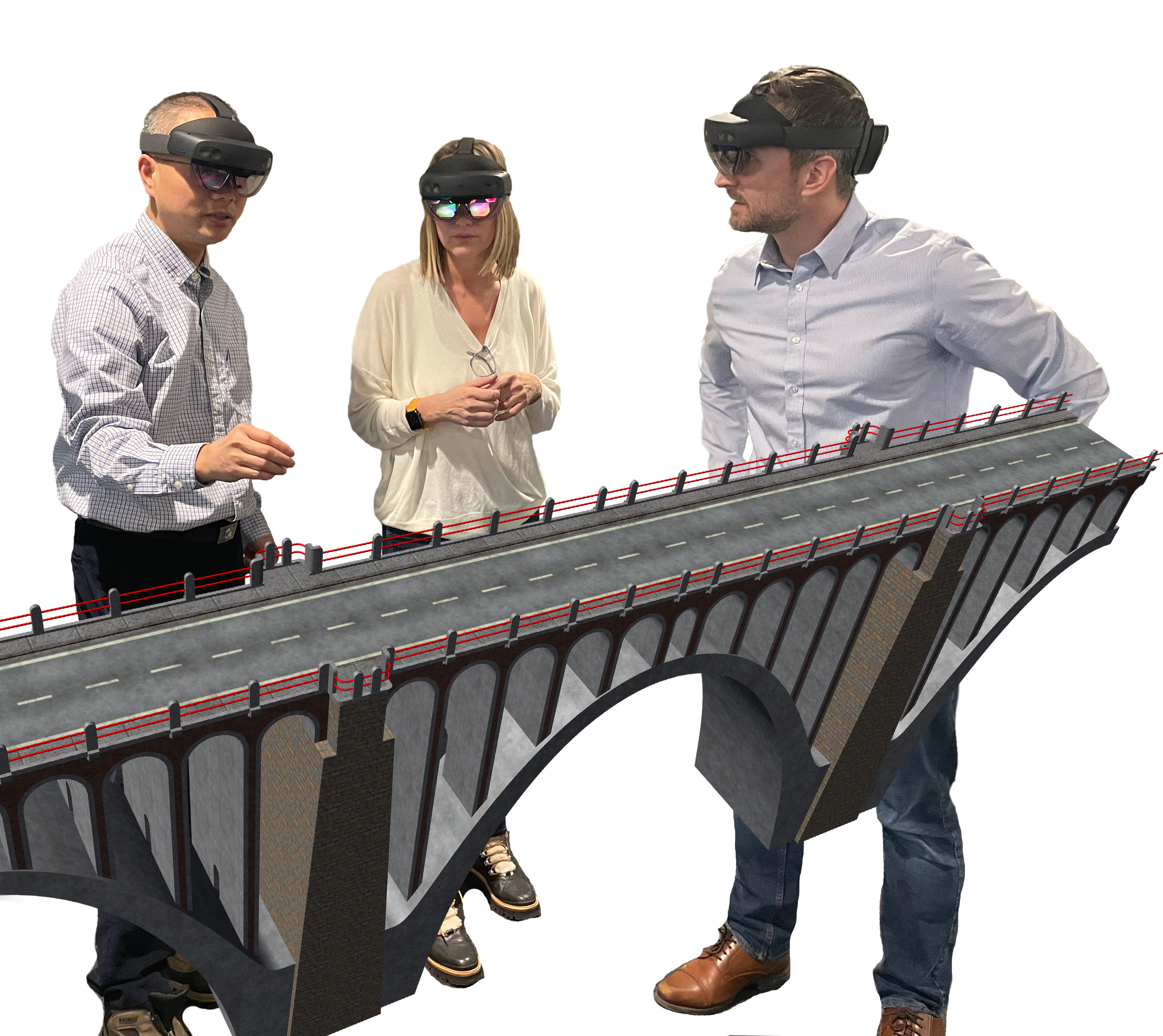
CrewXR enables inspectors to examine high-fidelity 3D models of real infrastructure, mark up structural concerns with holographic annotations, and collaborate with remote experts — all without climbing a single girder. The system prepares teams for AI-augmented inspection workflows.
Results
- •Eliminated need for dangerous on-site climbing during review
- •Holographic annotations preserve institutional knowledge
- •Remote experts can collaborate in real-time on 3D models
- •Foundation for AI-augmented automated inspection
- •More consistent and objective assessment methodology
The Challenge: Dangerous, Subjective, and Inconsistent
America's infrastructure inspection process hasn't fundamentally changed in decades. Inspectors climb bridges, crawl through tunnels, and hang from scaffolding to visually assess structural integrity. It's physically demanding, genuinely dangerous, and highly subjective.
Two inspectors examining the same bridge may reach different conclusions based on their experience, the lighting conditions, or simply which angle they happened to view a crack from. Reports are often text-based descriptions that lose critical spatial context. And when an expert opinion is needed, that expert must travel to the site — adding days or weeks to the process.
The Solution: Holographic Inspection and Remote Collaboration
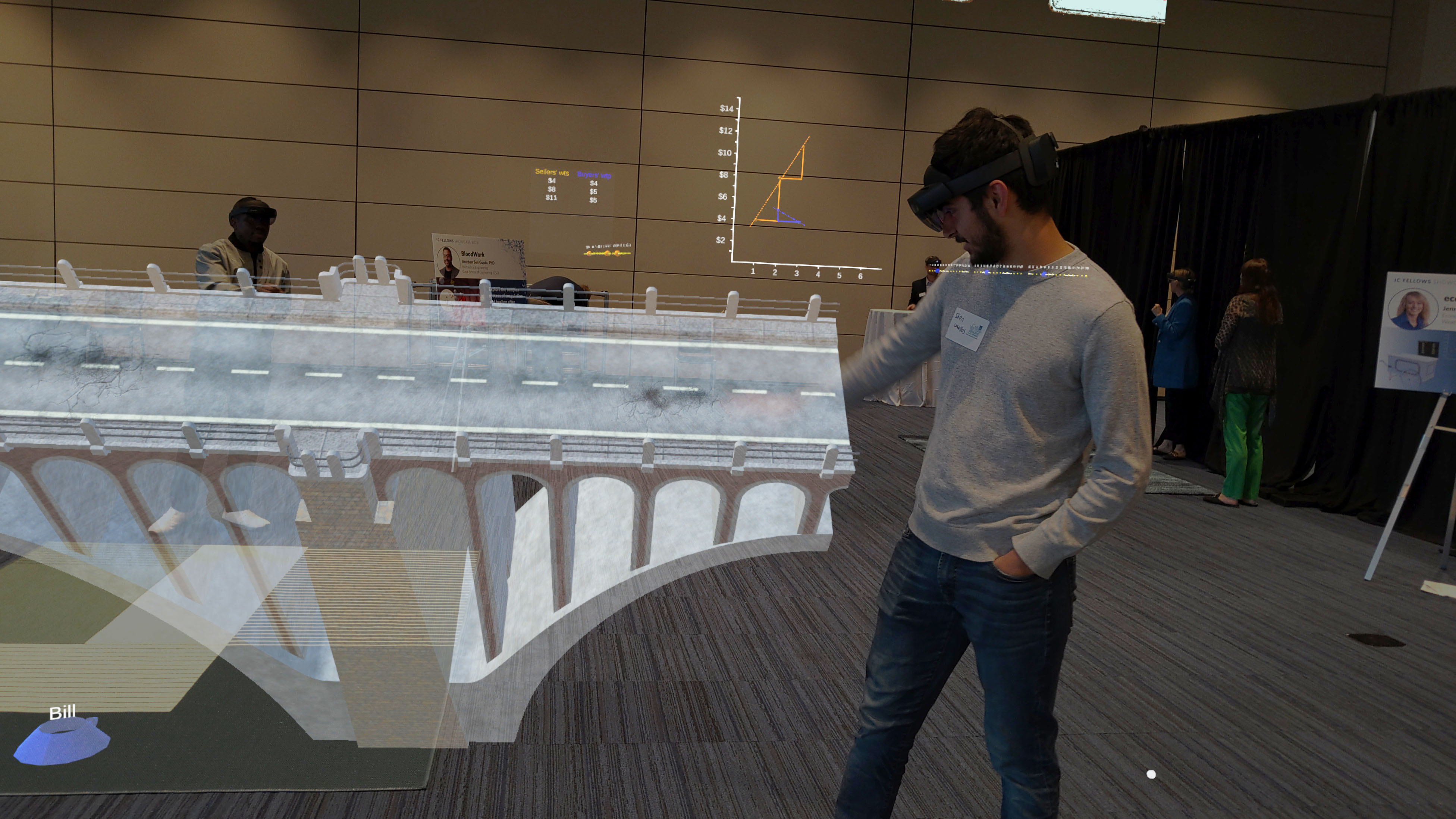
CrewXR transforms infrastructure inspection by bringing the structure to the inspector rather than the inspector to the structure. High-fidelity 3D scans of bridges and other infrastructure are loaded into the platform, where they can be examined at any scale — from a full overview down to individual rivets.
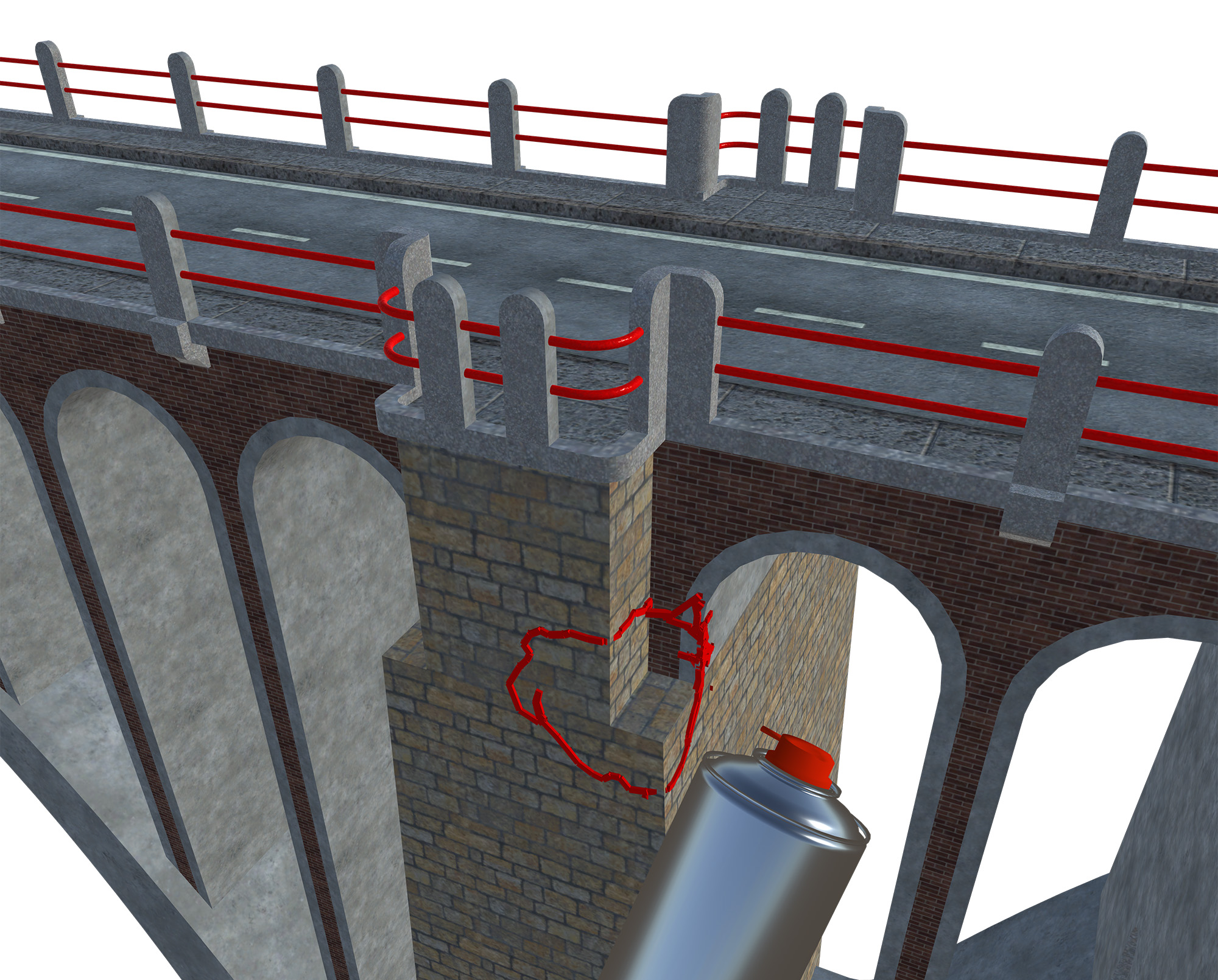
Inspectors mark up structural concerns with holographic annotations that are spatially anchored to exact locations on the 3D model. These annotations persist across sessions, creating a living record of the structure's condition over time. When a specialist's opinion is needed, they join the same holographic environment remotely, examining the structure as if standing next to it.
The platform also lays the groundwork for AI-augmented inspection. By building a database of annotated 3D scans, teams can train algorithms to flag potential issues automatically — a "Digital Ghost" that guides inspectors to areas needing attention.
The Impact: Safer, Smarter, More Consistent
The immediate impact is safety: inspectors can conduct detailed structural reviews without physical risk. But the deeper impact is quality. By standardizing the inspection process around 3D models with persistent annotations, assessments become more consistent, more thorough, and more easily reviewed.
Institutional knowledge — the experienced inspector's intuition about where to look and what to look for — is captured in holographic annotations rather than lost when people retire. Remote collaboration means expert opinions can be obtained in hours rather than weeks. And the foundation for AI augmentation promises to make every inspector as thorough as the most experienced veteran.