
Education — Arts
Dancing with Technology
The largest shared-group mixed reality performance ever produced
Client: CWRU Department of Dance
Challenge
Live performance is limited to physical staging and static sets. Dancers and choreographers dream of environments that respond to movement, but the technology to create real-time, audience-shared holographic experiences at scale didn't exist.
Solution
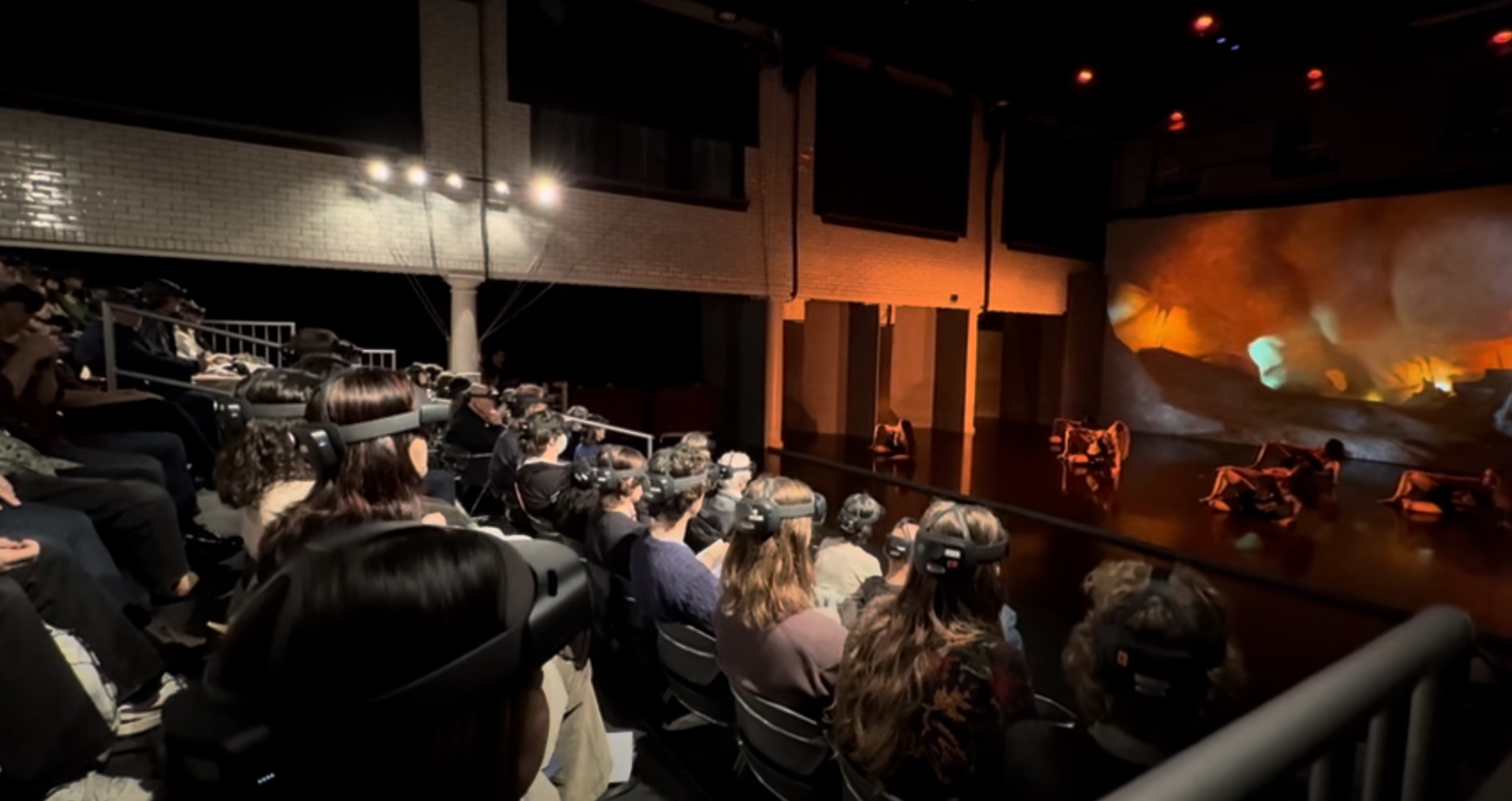
CrewXR powered "Quest," a groundbreaking mixed reality dance performance. LiDAR-tracked dancers performed alongside real-time holographic projections that responded to their movements, creating an immersive experience shared simultaneously by the entire audience through synchronized headsets.
Results
- •Largest shared-group mixed reality experience ever produced
- •Audience members experienced holographic visuals synced to live dance
- •Real-time LiDAR tracking of dancers for responsive environments
- •Pioneered a new art form at the intersection of dance and XR
The Challenge: Beyond the Physical Stage
Dance is fundamentally about bodies moving through space. But for centuries, the "space" of dance has been limited to what physical staging can create — fixed sets, projected backdrops, and static lighting. Choreographers have long imagined environments that breathe with the dancers, responding to and amplifying human movement.
The technology to create such experiences existed in fragments — motion capture in film studios, VR in gaming — but no platform could deliver real-time, responsive holographic environments to a live audience. The challenge required tracking dancers precisely, generating visual responses instantly, and synchronizing the experience across dozens of simultaneous viewers.
The Solution: Quest — Where Movement Meets Holography
"Quest" represented a new kind of performance. Using CrewXR's real-time synchronization platform, dancers were tracked with LiDAR sensors that captured their positions and movements with centimeter precision. This data fed into holographic rendering systems that generated visual environments — flowing particles, geometric structures, luminous trails — that responded instantly to the dancers' movements.
Every audience member, wearing synchronized mixed reality headsets, saw the same holographic world layered over the live dancers. When a dancer leapt, trails of light followed. When the ensemble moved in unison, the space itself seemed to transform. The physical and virtual were seamlessly merged into a single, shared experience.
The Impact: A New Art Form
Quest became the largest shared-group mixed reality experience ever produced, demonstrating that CrewXR's platform could synchronize complex, real-time holographic content across a live audience at scale.
But beyond the technical achievement, Quest pioneered something more profound: a new art form that merges live performance with responsive digital environments. Professor Gary Galbraith called it "the current generation of art and technology in the form of extended reality dance theater."
The success of Quest proved that immersive, shared experiences aren't limited to education or enterprise — they can transform how we experience art, culture, and human expression.
“Quest is the current generation of art and technology in the form of extended reality dance theater.”