Education — Sciences
ChiReality
Teaching molecular chirality through immersive, hands-on 3D experience
Client: CWRU Department of Chemistry / IC Fellows Cohort
Challenge
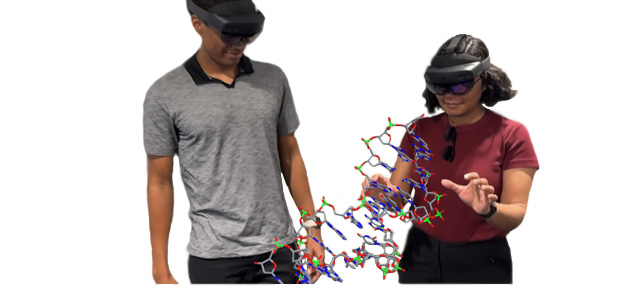
Chemistry students often complete entire degree programs studying molecules through written symbols and 2D diagrams without ever truly comprehending their three-dimensional nature. Chirality — the "handedness" of molecular structures — is especially difficult to grasp from flat representations, yet it determines whether a drug heals or harms.
Solution
ChiReality immerses a class of students together in a shared world of oversized helical structures. Using their hands and bodies, learners physically determine the chirality of 3D molecular twists, sorting structures into correct bins in a gamified environment where teams compete and collaborate in the same synchronized 3D space. The app progresses from symbolic structures to actual molecular representations, building intuition that textbooks cannot.
Results
- •Students physically engage with 3D molecular structures rather than memorizing 2D diagrams
- •Gamified scoring system encourages teamwork and competition
- •Progressive difficulty from symbolic to realistic molecular representations
- •Designed for DNA Origami and advanced chemistry curricula
- •Developed through CWRU's Provost-sponsored IC Fellows program
The Challenge: A Dimension Students Never See
Chirality is one of the most consequential concepts in chemistry. The same molecule, mirrored, can be the difference between a life-saving drug and a toxic compound. Thalidomide's tragic history taught that lesson in the most painful way possible.
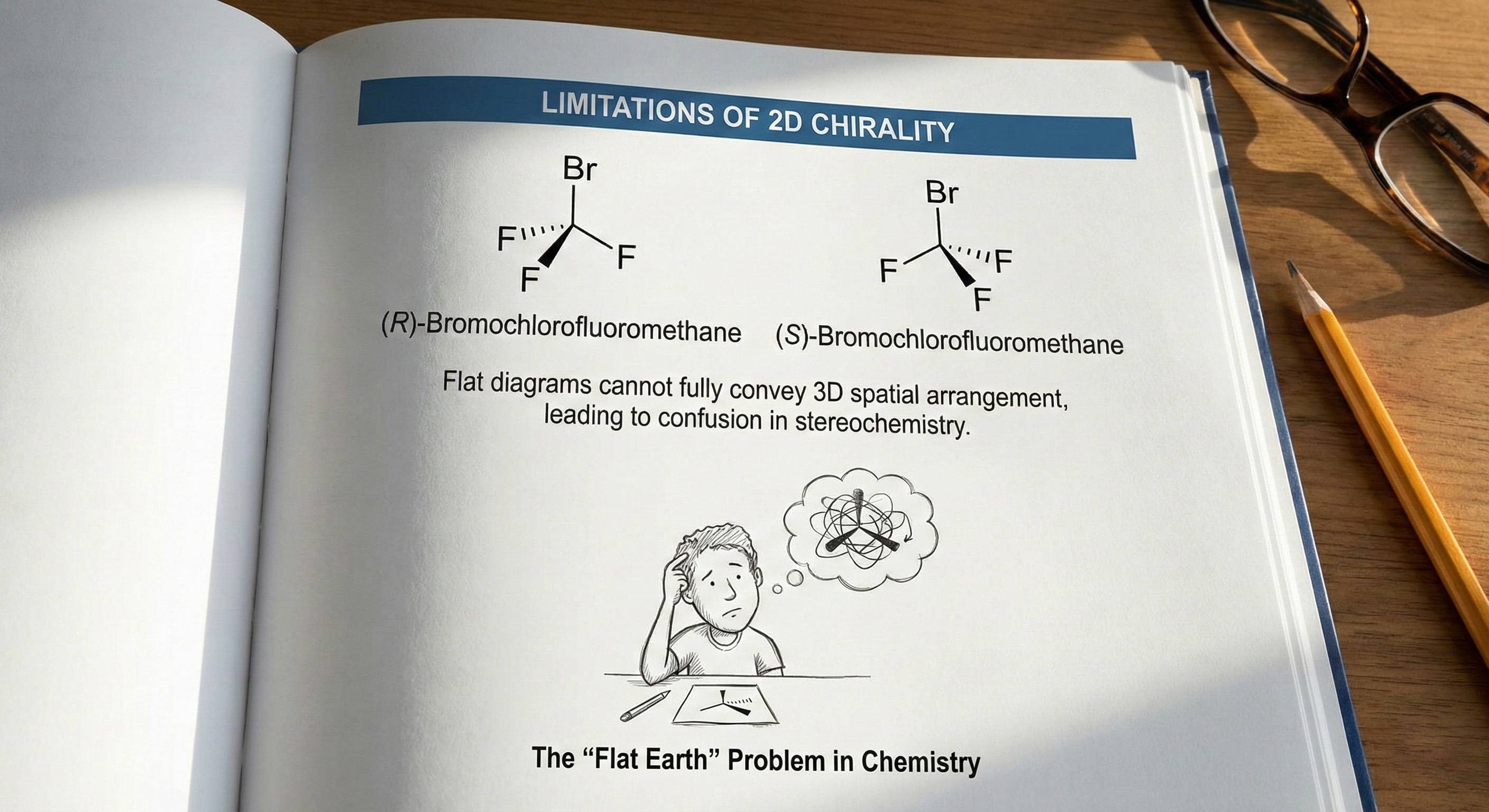
Yet students learn chirality from flat diagrams — wedge-and-dash notation on paper, or at best, a professor rotating a physical model that only the front row can see. Dr. Divita Mathur recognized a fundamental disconnect: students were passing exams on chirality without ever developing true three-dimensional intuition for molecular handedness. They could apply rules, but they couldn't see it.
The Solution: Step Inside the Molecule
ChiReality puts students inside a field of oversized helical structures — towering twists that resemble bamboo stalks, each with a distinct handedness. Students use their hands and bodies to physically determine each structure's chirality: reaching out, rotating around, looking from different angles. They sort structures into left-handed and right-handed bins, with a scoring system that turns assessment into a game.
The experience is collaborative and competitive. Teams work together, calling out observations, debating assignments, building the kind of spatial vocabulary that no textbook can teach. As students progress, the structures evolve — from abstract helices to realistic molecular representations, and eventually to opportunities to construct molecules from virtual building blocks.
The genius of the approach is that it builds intuition before formalism. By the time students return to 2D notation, they carry a three-dimensional understanding that transforms how they read every molecular diagram.
The Impact: From Memorization to Embodied Understanding
ChiReality demonstrates what happens when you let students experience a concept rather than memorize it. The tactile, spatial engagement with chirality creates the kind of deep understanding that persists — not the fragile knowledge that evaporates after the exam.
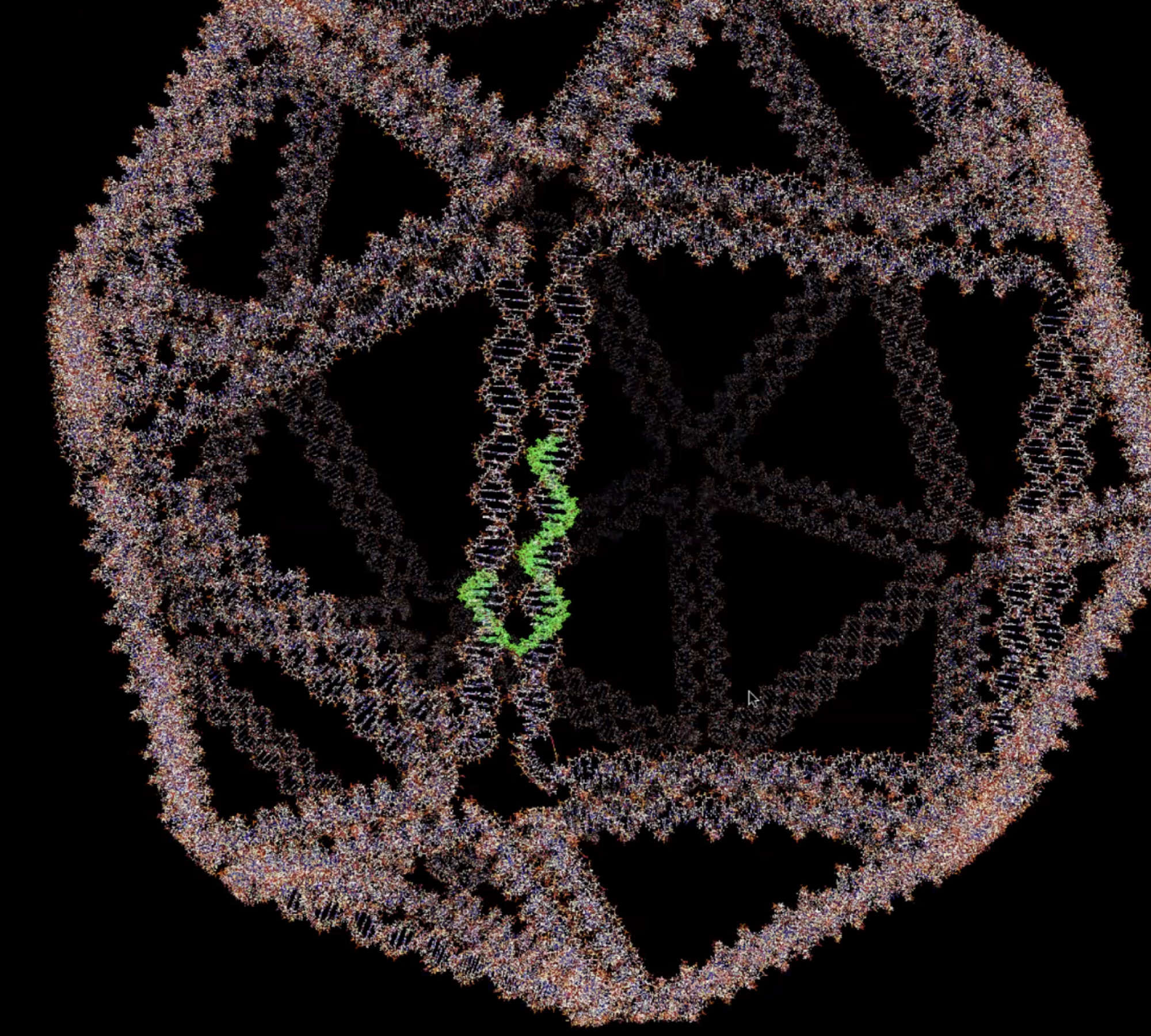
Dr. Mathur's roadmap extends the concept further: future modules will advance from the current helical structures to actual molecular representations, enabling students to build DNA origami structures and explore the chiral properties of pharmaceutical compounds in 3D. The platform becomes a laboratory where the abstract becomes tangible.
With CrewXR's AI integration, the next evolution is building an AI chemistry tutor that watches how students interact with the structures, identifies when they're applying rules mechanically rather than reasoning spatially, and intervenes with targeted guidance — "Try looking at this from above. What do you notice about the twist direction?" — building genuine intuition one student at a time.
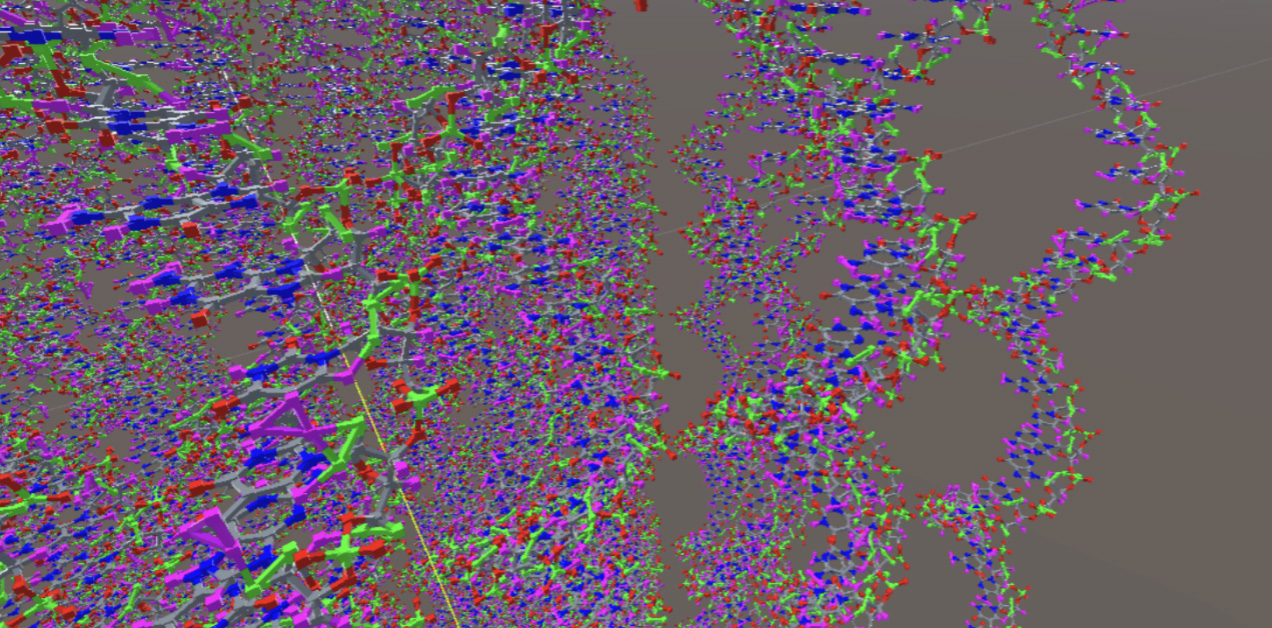
“Students complete entire chemistry programs studying molecules through written symbols and calculations without truly comprehending their three-dimensional nature.”